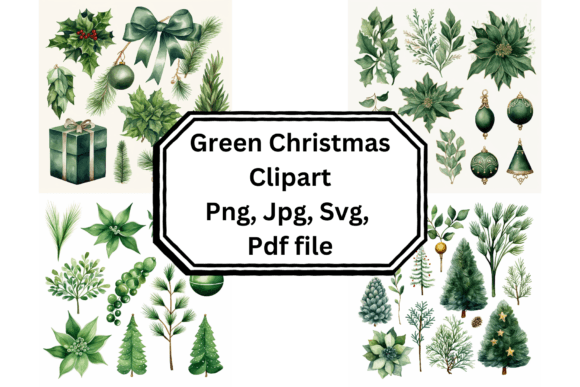
Green Christmas Clipart & Illustrations Review
As a brand designer who has spent the last decade helping local businesses find their visual voice, I approach every new graphic design asset with a critical eye. It is not just about whether an image looks pretty; it is about whether it works in the real world of product packaging, social media feeds, and shelf appeal. Recently, I evaluated a collection titled Green Christmas Clipart for a potential project involving a small-batch artisanal soap maker. The goal was to determine if these assets could elevate a seasonal campaign without overwhelming the brand’s established identity.
The first impression of this collection is distinctly organic and grounded. Unlike the neon-bright, hyper-commercial holiday graphics that flood the market in November, these Illustrations lean into a more subdued, natural palette. The dominant use of forest greens, sage, and olive tones suggests a brand personality that is eco-conscious, handmade, and sophisticated. For a local business focusing on sustainability or natural ingredients, this mood is invaluable. It feels less like a generic holiday sale and more like a curated winter experience. This distinction is crucial for small business branding, where emotional connection often drives purchasing decisions more than price.
Integrating Seasonal Assets into Brand Identity
When considering how to use Green Christmas Clipart, I immediately looked beyond simple decoration. In professional branding, every element must serve a purpose. For the soap brand I was consulting, the challenge was creating a limited-edition holiday bundle that felt premium yet accessible. These assets proved versatile enough to anchor the entire packaging design. We used the botanical elements as border accents on the box lids, creating a frame that drew the eye directly to the product name. This technique improves visual hierarchy, ensuring that the customer sees the brand name first, followed by the seasonal motif, and finally the product details.
The versatility of these design assets extends to various touchpoints. For product labels, the clipart works exceptionally well when scaled down. I tested the PNG files on a standard two-inch circular label, and the line weight remained crisp. This is a common failure point for many digital products, but here, the resolution held up. For larger applications, such as social media graphics or website banners, the assets provide enough detail to stand alone as hero images. A boutique owner could easily place a single pine branch illustration next to a promotional code, creating a clean, uncluttered ad that performs well on Instagram or Pinterest.
Practical Applications for Local Entrepreneurs
For handmade business owners, time is often the scarcest resource. Using pre-made clipart allows for rapid deployment of high-quality marketing visuals without the cost of custom illustration. Here are several ways I recommend integrating this specific collection into your workflow:
- Packaging Accents: Use the smaller botanical elements as corner details on tissue paper or sticker seals. This adds a layer of unboxing delight that customers love to share online.
- Thank-You Cards: Pair the greenery with a simple sans serif font to create elegant insert cards. This reinforces professional branding even after the purchase is complete.
- Menu Graphics: Cafes and bakeries can use these illustrations to highlight seasonal specials. A green wreath around a "Peppermint Latte" listing creates immediate seasonal context.
- Web Design: Use the SVG or high-res PNG files as background textures for holiday landing pages. Ensure you lower the opacity to maintain readability of the text overlay.
It is important to note that while these assets are festive, they avoid the cliché red-and-green contrast. This makes them ideal for brands that want to acknowledge the season without abandoning their minimalist or modern aesthetic. For a creative marketplace seller, this means the assets can appeal to a broader demographic, including those who prefer subtle, rustic, or Scandinavian-inspired holiday decor.
Navigating Design Constraints and Best Practices
However, no design asset is a magic bullet. There are specific contexts where Green Christmas Clipart should be used with caution. Because the style is somewhat detailed and organic, it can compete with text if not managed properly. I advise against placing these illustrations behind dense paragraphs of information, such as ingredient lists or legal disclaimers on product labels. The intricate lines can make small text difficult to read, violating basic accessibility and usability principles.
Furthermore, this style may not suit every brand archetype. If you are running a high-tech startup or a corporate financial firm, these whimsical, nature-inspired Illustrations might clash with your established brand identity. They are best suited for lifestyle, food, beauty, home decor, and children’s product brands. For luxury minimalist brands, ensure that the clipart is used sparingly—perhaps as a single, small icon rather than a full-border pattern—to maintain an air of exclusivity.
Designer Notes for Implementation
Before you commit to using these assets in a client project or for your own commercial design needs, perform a few practical tests. First, always check the commercial license terms. While most creative marketplaces offer standard licenses for physical product sales, verify if there are restrictions on print runs or digital redistribution. Second, test the colors. Monitor calibration varies, so print a sample product mockup to ensure the greens do not appear muddy or too dark on your chosen paper stock. Kraft paper, for instance, can alter the perception of green tones significantly.
Typography pairing is another critical factor. I found that these green botanical elements pair beautifully with both serif and handwritten fonts. A classic serif adds a touch of tradition and elegance, while a flowing script enhances the handmade feel. Avoid overly decorative display fonts, as they can create visual noise when combined with detailed clipart. Instead, opt for clean, legible typefaces to let the illustration shine.
Finally, consider the format. If you are working with a vector-based program like Adobe Illustrator, check if SVG files are available. Vector formats allow for infinite scaling without quality loss, which is essential for large-format printing like posters or storefront windows. If you are using Canva or similar tools, ensure the PNG files have transparent backgrounds. This allows you to layer the graphics over photos or colored backgrounds seamlessly, a key requirement for dynamic social media graphics.
In conclusion, Green Christmas Clipart is a strong contender for small businesses looking to add a touch of seasonal warmth without sacrificing sophistication. When used thoughtfully within a cohesive brand identity, these assets can enhance customer trust, improve shelf appeal, and create a memorable holiday experience. By focusing on proper placement, typography pairing, and licensing compliance, local brand owners can leverage these Illustrations to create professional, polished, and emotionally resonant marketing materials.