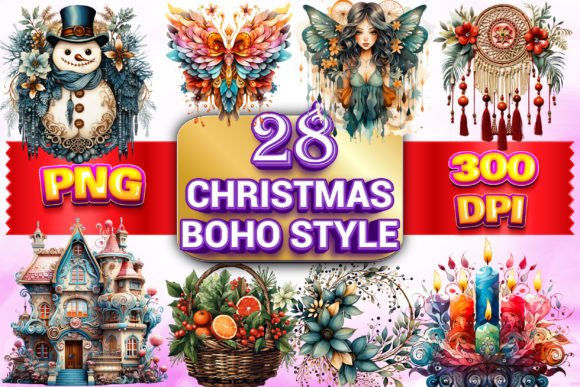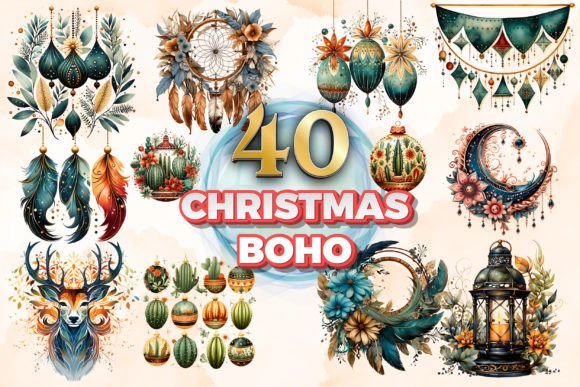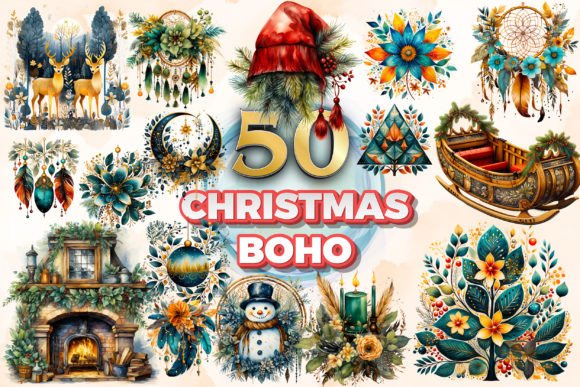
Reviewing Christmas Boho Clipart 4 for Stitching
As a designer who spends more time staring at digitized files than actual fabric, I have learned that not every pretty illustration translates well into thread. When I first opened Christmas Boho Clipart 4, my initial reaction was one of cautious optimism. The aesthetic is undeniably trendy, blending the warm, earthy tones of bohemian style with the festive cheer of the holiday season. But as embroidery professionals, we know that visual appeal on a screen is only half the battle. The real test is how those lines and shapes behave under the needle.
I approached this review with a specific project in mind: a custom embroidered tote bag for a local boutique client. They wanted something that felt modern yet seasonal, avoiding the cliché red-and-green overload typical of December merchandise. This is where Christmas Boho Clipart 4 shines. It belongs to the broader category of Illustrations that prioritize mood and silhouette over hyper-realistic detail, which is often a blessing for machine embroidery. Complex gradients and tiny details are the enemies of clean stitching, and this design seems to respect the limitations of the medium.
The Aesthetic Appeal and Design Layout
The first thing you notice about Christmas Boho Clipart 4 is its balanced composition. It does not scream for attention; rather, it invites a closer look. The elements appear to draw from natural motifs—perhaps dried oranges, eucalyptus leaves, or minimalist star shapes—rendered in a palette that suggests terracotta, sage, mustard, and cream. For an embroidery project, this color separation is crucial. Distinct color blocks allow for cleaner satin stitch borders and more manageable fill stitch areas.
From a layout perspective, the design feels open. There is breathing room between the elements. This is vital for maintaining the integrity of the fabric. If a design is too dense, it puckers the material, turning a soft cotton tote into a stiff, cardboard-like coaster. The airy nature of this clipart suggests it will sit lightly on textured fabrics, making it an excellent candidate for linen aprons, canvas bags, or even lightweight sweatshirts where drape matters.
Real-World Application: From Screen to Stitch
To truly evaluate Christmas Boho Clipart 4, I mentally walked through the production process for a few different items. Let’s start with the tote bag. For a standard 15-inch canvas tote, this design would work beautifully as a central chest placement or a larger back panel feature. The boho vibe aligns perfectly with the current market demand for sustainable, handmade products. An Etsy seller could easily pair this with neutral-colored blanks to create a high-perceived-value item without needing expensive materials.
Next, consider custom apparel. Imagine this design stitched onto the left chest of a heather grey crewneck sweatshirt. The contrast between the muted boho colors and the grey fabric would be subtle but sophisticated. However, here is where practical judgment comes in. Sweatshirt fleece has a pile. If the design relies heavily on fine running stitches or very thin satin columns, they might get lost in the texture. I would recommend checking the stitch density of the digital embroidery file before committing. If the design uses broader fill stitches, it will hold up better against the fuzzy surface of the garment.
For baby embroidery, such as a onesie or a nursery pillow cover, the softness of the design is a major asset. Parents are increasingly drawn to gender-neutral, nature-inspired themes for holiday gifts. Christmas Boho Clipart 4 fits this niche perfectly. However, baby skin is sensitive, and baby clothes are washed frequently. This brings us to the importance of stabilizer choice. Regardless of how beautiful the design looks, if it is not backed with a proper cut-away or tear-away stabilizer suitable for the fabric weight, the stitching will distort after the first wash.
Technical Considerations for Embroiderers
While the artistic merit of Christmas Boho Clipart 4 is strong, there are technical hurdles to consider before loading it into your machine. First, assess the smallest details. Boho styles often incorporate delicate lines or tiny dots. In embroidery, these can become problematic if they are smaller than the needle’s penetration point or if the thread tension pulls them out of shape. I always advise testing the design on a scrap piece of the exact fabric you intend to use. What looks crisp on a white background in a printable mockup might blur on a dark navy towel.
Speaking of dark fabrics, thread color contrast is key. If you are stitching this on a black cap or a deep green apron, ensure your thread colors pop. You may need to adjust the thread chart slightly from the original illustration to maintain visibility. A satin stitch border in a contrasting metallic gold or bright cream could help define the edges and prevent the design from looking muddy on darker backgrounds.
Hoop size is another critical factor. If you are working with a small 4x4 hoop, you might need to resize the design. Be careful here. Scaling down an embroidery file can cause stitches to overlap excessively, creating a dense, hard patch that damages the fabric. Always check the stitch count and density recommendations provided with the digital embroidery file. If such details are not explicitly provided, proceed with caution and run a test stitch-out.
Commercial Viability and Brand Consistency
For small shop owners and craft business operators, consistency is brand currency. Christmas Boho Clipart 4 offers a versatile asset that can be used across multiple product lines. You could use it on kitchen towels for holiday hosting sets, on patches for denim jackets, or even as part of a larger collage for a boutique branding campaign. Its neutral yet festive tone allows it to bridge the gap between early autumn decor and late December celebrations, extending its shelf life in your inventory.
Customer trust is built on quality. A clean, well-digitized design reflects professionalism. If the threads are neat, the tension is balanced, and the design sits flat, customers perceive the entire product as high-end. Conversely, loose threads or puckering suggest amateurism. Because Christmas Boho Clipart 4 relies on simpler shapes, it is generally more forgiving to stitch than highly detailed realistic images. This makes it a safer bet for high-volume production during the busy holiday season.
Final Designer Notes
- Test on Scrap Fabric: Always run a test stitch on the actual material to check for puckering or thread breaks.
- Check Stabilizer: Match your stabilizer to the fabric weight. Use cut-away for stretchy knits and tear-away for stable wovens.
- Verify Licensing: Before selling finished products or using this in commercial embroidery projects, confirm the license terms associated with the design assets.
- Contrast Check: View the design in black and white to ensure the shapes are distinct and readable without color reliance.
- Thread Quality: Use high-quality polyester or rayon threads to reduce breakage and enhance the sheen of the finished product.
In conclusion, Christmas Boho Clipart 4 is a thoughtful addition to any designer’s library. It captures the current zeitgeist of understated, natural holiday decor while remaining practical for machine execution. Whether you are creating a personalized gift for a friend or stocking your Etsy shop with seasonal bestsellers, this design offers the flexibility and charm needed to stand out in a crowded market. Just remember to respect the technical limits of your machine and fabric, and you will achieve a finished product that looks as good in hand as it does on the screen.